
Bring control to construction-site workflows
Standardise how site activities are created, assigned, reviewed and closed. Manage responsibilities, evidence, status and decisions in one connected environment—from the initial request to the final record.
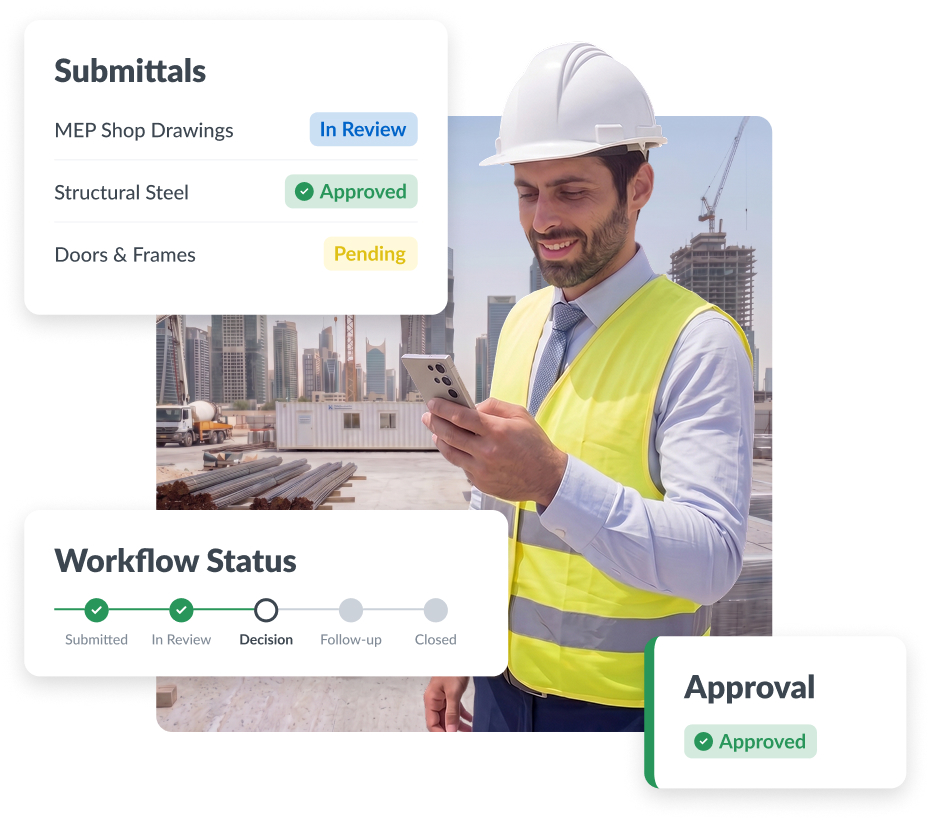
Over 200,000 users across 75+ countries are eliminating paperwork with PlanRadar







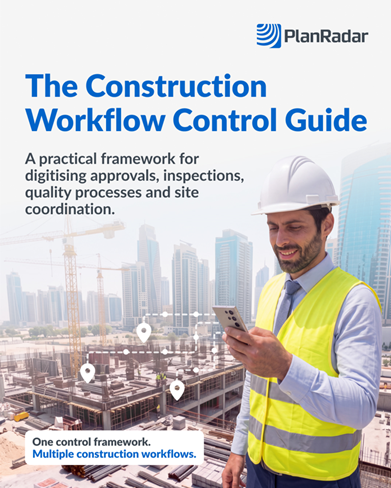
Where construction workflows lose control
Calls, WhatsApp, emails, spreadsheets and separate files may keep information moving—but they do not create a controlled workflow.
Scattered project information
Documents, photos, comments and updates remain distributed across different channels.
Unclear ownership and status
Teams cannot easily see what is pending, who is responsible or what should happen next.
Delayed action and rework
Missing context slows decisions and increases schedule pressure and the risk of rework.

Different workflows. One consistent control framework.
From technical submissions to site inspections, effective workflows depend on complete information, clear responsibility, visible status and a recorded final decision.
Material & Product Submittals
Manage technical information, product data, certificates and supporting documents through a defined review and approval process.
Shop Drawings
Coordinate drawings between contractors, consultants and design teams while maintaining clear review stages and version history.
Work Inspection Request
Raise, review, inspect and close WIRs with connected locations, supporting evidence, responsibilities and recorded decisions.
Request for Information
Route technical questions, connect responses to project information and maintain a traceable record of every clarification.
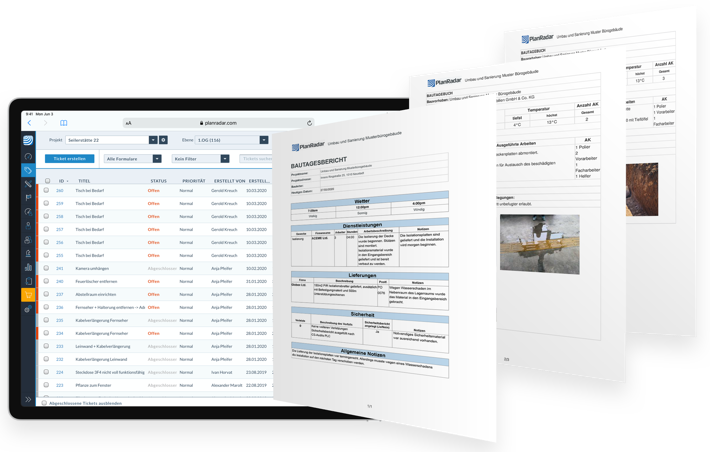
The same framework can support NCRs, SORs, snagging, HSE inspections, corrective actions, testing and commissioning, handover and other site workflows.
Six stages of a controlled construction workflow
A controlled workflow connects every stage—from defining the process and capturing the required information to assigning responsibility, recording decisions and preserving the final record.

Define the workflow: Set the purpose, stages, required inputs, review rules and possible outcomes.

Capture complete information: Record the activity, location, technical details, documents and supporting site evidence.

Assign and route: Assign owners, reviewers and deadlines, then route the activity to the right participants.

Execute and review: Complete the required work and review it with the relevant project information and site context.

Decide and follow up: Record the decision, communicate the outcome and assign any corrective or follow-up actions.

Verify and close: Confirm completion, update the final status and preserve the complete workflow history.
Bring every workflow stage into one structured environment

Defined workflow routes

Live status visibility

Clear accountability

Connected project evidence
In-context collaboration

Traceable actions and decisions
What makes PlanRadar different
PlanRadar combines configurable construction workflows with mobile site execution, connected project information and visual evidence.

Configurable construction workflows
Standardise processes across projects while adapting routes, roles and decision stages to individual project requirements.
360° visual site evidence
Connect SiteView’s 360° visual documentation with plans, inspections and workflows to give decision-makers clearer site context.

AI-supported speed and clarity
Use AI to help complete information, suggest workflow routes and locate relevant project information faster.
See structured construction workflows in practice
Explore how common construction-site processes move from initial creation to final closure, with responsibilities, evidence, status and decisions recorded in one place.
From submission to closure
Create the WIR
Add work details and location
Attach supporting evidence
Submit for inspection
Conduct the inspection
Record the decision
Close and preserve the record
Outcome: Better inspection control, clearer accountability and stronger follow-up on site actions.
From submission to final decision
Create the MIR
Add material information
Attach supporting documents
Submit for review
Review and comment
Record the decision
Track status and preserve the record
Outcome: A clear review path, complete traceability and stronger control over material approvals.
From issue identification to verified closure
Record the issue
Identify the location
Attach supporting evidence
Assign responsibility
Complete the corrective work
Verify the result
Close the record
Outcome: Faster close-out, clearer responsibility and reliable records of corrective actions.


Explore PlanRadar
PlanRadar gives project teams a connected platform for managing submissions, reviews, inspections, supporting evidence, communication, follow-up actions, and final decisions.
