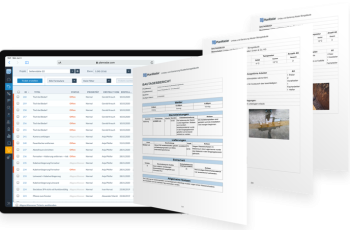
Construction workflows are often seen as administrative steps, but on a busy construction site, they play a much bigger role. They help site teams manage inspections, submittals, approvals, corrections, issues, and accountability in a more structured way.
Every construction project depends on a continuous chain of decisions. A material needs approval before it is installed. A work inspection request needs to be checked before the next activity begins. A shop drawing must be reviewed before execution. An RFI needs a clear response before work continues. A non-conformance report must be corrected, verified, and closed.
When these steps are handled through disconnected emails, spreadsheets, paper forms, verbal updates, or informal messages, site teams can lose visibility. Responsibilities become unclear, approvals slow down, and important records become harder to track.
This is why construction workflows are important. They do not only document what happened. They help control how work moves from one stage to the next.
According to McKinsey, construction remains one of the world’s largest industries, with $13 trillion in gross annual output in 2023. The same article highlights the continued need to improve productivity in the sector. This makes better coordination, clearer processes, and more structured project execution increasingly important for construction teams.

What Are Construction Workflows?
A construction workflow is the defined path that a task, request, inspection, approval, or issue follows from start to closure.
In simple terms, a workflow answers questions such as:
Who needs to act next?
What information is required?
Who needs to review or approve?
What happens if comments are raised?
When is the item considered closed?
Where is the final record stored?
A typical construction workflow may look like this:
Create → Review → Inspect → Comment → Approve or Reject → Correct → Close
This structure can apply to many common site activities, including:
| Workflow Type | Practical Site Example |
| Material / Product Submittal | Approval of materials before procurement or installation |
| WIR | Inspection request before covering or continuing completed work |
| Shop Drawing | Technical review before site execution |
| RFI | Clarification before proceeding with uncertain or conflicting information |
| NCR | Recording and resolving work that does not meet requirements |
| MIR | Material inspection after delivery to site |
| QA/QC Checklist | Structured quality control before sign-off |
The goal is not to create more paperwork. The goal is to make site activity easier to manage, track, and close.
Why Construction Workflows Matter on Site
Construction sites move quickly. Different teams are working at the same time, often across multiple zones, levels, packages, or disciplines. Main contractors, subcontractors, consultants, developers, and suppliers all need to stay aligned.
Without structured workflows, small issues can quickly become bigger problems. A missing approval may delay installation. A late inspection may hold the next activity. An unclear comment may create rework. A forgotten correction may affect quality or handover.
A form records information, but a workflow controls how that information moves.
This difference is important. Many projects already use forms for WIRs, RFIs, NCRs, MIRs, shop drawings, and submittals. However, if those forms are not connected to clear ownership, routing, status tracking, and closure, teams still depend on manual follow-up.
For site managers, this creates a major challenge. They do not only need to know that an item exists. They need to know whether it is pending, approved, rejected, overdue, corrected, or closed.
Example 1: Material / Product Submittal Workflow
A Material / Product Submittal is a good example of how construction workflows support better site control.
Before materials are installed, the project team usually needs to review technical documents, datasheets, compliance certificates, samples, warranties, method statements, or manufacturer details. If this information is incomplete or delayed, procurement and installation can be affected.
A practical Material / Product Submittal workflow may look like this:
Subcontractor submits material package
→ Main contractor reviews completeness
→ Consultant checks technical compliance
→ Client or project team approves, rejects, or comments
→ Material is released for procurement or installation
→ Final decision is recorded
The value is not only in getting the approval. The value is in knowing who approved the material, when it was approved, which documents were reviewed, and whether any comments or conditions were attached.
This helps site teams avoid confusion later, especially when questions arise during installation, inspection, claims, or handover.
Example 2: WIR Workflow
A Work Inspection Request, or WIR, is one of the most practical examples of construction workflows in daily site management.
A WIR is usually raised when completed work needs to be inspected before the next activity starts. This is especially important before work is covered, concealed, or followed by another trade.
A practical WIR workflow may look like this:
Foreman or site engineer raises the inspection request
→ QA/QC engineer checks readiness
→ Consultant inspects the work
→ Comments are added if corrections are needed
→ Contractor rectifies the issue
→ Re-inspection is completed
→ Work is approved and closed
This process helps protect quality. It also creates a clear record of what was inspected, where it happened, who reviewed it, what comments were raised, and when the item was closed.
For site managers, this is critical. Without a structured WIR workflow, inspections may be delayed, comments may be missed, and teams may proceed before approval is properly recorded.
Example 3: RFI Workflow
RFIs are another important part of site management. They are often raised when the site team needs clarification about design details, specifications, coordination issues, or conflicting information.
A practical RFI workflow may look like this:
Site team identifies unclear information
→ RFI is submitted with location, description, photos, and related plans
→ Consultant or designer reviews the question
→ Response is issued
→ Site team updates the work approach
→ RFI is closed and stored as a project record
The key issue with RFIs is speed and clarity. If responses are delayed or unclear, work may stop, proceed incorrectly, or create future disputes. A structured workflow makes it easier to track the status of each RFI and ensure that answers are connected to the relevant work area.
Example 4: NCR Workflow
A Non-Conformance Report, or NCR, is used when work, materials, or execution do not meet the required standard, specification, or approved method.
A practical NCR workflow may look like this:
Issue is identified
→ NCR is raised with evidence
→ Responsible party is assigned
→ Corrective action is proposed
→ Correction is completed
→ Work is verified
→ NCR is approved and closed
This workflow is important because unresolved non-conformances can affect quality, safety, cost, and handover. A clear NCR workflow helps ensure that issues are not only recorded, but also followed through until closure.

What Good Construction Workflows Should Include
A strong construction workflow should be simple enough for site teams to use, but structured enough to support control and accountability.
At a minimum, good construction workflows should include:
| Requirement | Why It Matters |
| Clear owner | Prevents confusion over who needs to act next |
| Defined approval path | Helps items move through the right people |
| Required fields | Reduces incomplete submissions |
| Location reference | Connects the issue or request to the actual site area |
| Attachments | Keeps photos, plans, documents, and comments together |
| Due dates | Supports timely follow-up |
| Status visibility | Shows whether items are pending, approved, rejected, overdue, or closed |
| Final record | Supports audits, claims, handover, and accountability |
This is where digital construction workflows become valuable. They can help teams connect information, automate routing, track status, and maintain a clearer project record.
Research from Autodesk and FMI found that poor project data can affect decision-making and contribute to rework. Their study reported that 30% of respondents said more than half of their project data was “bad,” and estimated that decisions based on bad data cost the construction industry $88.69 billion in rework in 2020.
How Construction Workflows Support Site Managers
Site managers need visibility, not more paperwork.
Their role depends on understanding what is happening across multiple teams, activities, and locations. They need to know which inspections are pending, which submittals are delayed, which RFIs are awaiting response, which NCRs are still open, and which approvals are blocking progress.
Structured construction workflows support site managers by making this information easier to follow.
Instead of chasing updates manually, they can see what stage each item is in. Instead of searching across different tools, they can review comments, attachments, photos, plans, and decisions in one place. Instead of relying on memory or verbal updates, they can refer to a clear record.
This creates a practical shift:
| Without Structured Workflows | With Structured Workflows |
| Manual chasing | Clear routing |
| Scattered updates | Connected context |
| Unclear responsibility | Assigned ownership |
| Delayed approvals | Better status visibility |
| Missing records | Traceable closure |
| Reactive decisions | Better control of site activity |
The benefit is not only administrative. It directly supports daily site execution.
From Documentation to Control
The strongest construction workflows are built around how site teams actually work.
They reflect real project activities such as Material / Product Submittals, WIRs, RFIs, NCRs, MIRs, Shop Drawings, and QA/QC checks. They also reflect the real people involved, including subcontractors, site engineers, QA/QC teams, consultants, project managers, and client representatives.
When these workflows are structured properly, they help teams move from scattered documentation to better control.
That means:
- Clearer ownership
- Faster follow-up
- Better visibility across stages
- More complete project records
- Stronger accountability
- More reliable handover information
In this sense, construction workflows are not just an office process. They are a site management tool.
Conclusion
Construction workflows help teams control the work, not just document it.
When workflows are structured around real site activities, they make it easier to manage inspections, submittals, approvals, corrections, RFIs, NCRs, and QA/QC processes. They also help site managers see what is pending, what is approved, what needs correction, and what has been closed.
For construction teams, this can reduce confusion, improve accountability, and support better coordination across the project lifecycle.
The practical value of construction workflows is simple: they help the right information move to the right people at the right time, with a clear record of every decision and action.
Bring More Control to Your Site Workflows
Manage inspections, submittals, approvals, site issues, and project records in one connected platform.