40% increase
in punch list efficiency

Select your region
Cancel
Sorry, region not found. Please try again.
40% faster punch on multifamily projects across the Midwest
Book a demoin punch list efficiency
setup than Bluebeam
site revisits
claims, same headcount
& live with field staff
Horizon Construction Group, Inc. has been a Midwest leader in multifamily residential construction since 1984, growing into a $400 million company while staying true to its core values of quality, integrity, and community. To elevate speed and quality, Horizon adopted PlanRadar to streamline punch list and warranty workflows. Since implementing the platform, Horizon has increased punch list efficiency by nearly 40%, enabling its teams to deliver high-quality projects on time with greater clarity and consistency.

Punch items were tracked in Bluebeam, a process teams described as slow and difficult to setup correctly, often taking hours or days per building. Plans also had to be manually clipped and relabeled unit by unit before a punch list could be created, adding hours of administrative work before the fieldwork began.

Subcontractors relied on blue tape and printed reports left on-site, with no attached photos or written detail. This left them to interpret what needed fixing and often led to rework.

Field reports were compiled by office staff or project engineers rather than superintendents, creating a bottleneck between the site and the people who needed the data.

As warranty claim volume grew alongside the project pipeline, tracking claims across spreadsheets and legacy tools became harder to manage and increasingly fragile.

We have blue tape, I’m the queen of it, I love it. But putting blue tape on a wall doesn’t really give you the description of what is actually going wrong
Ashley Gohlke ,
Field Superintendent, Horizon Construction Group

Adoption came faster than Horizon expected across a field team spanning multiple generations of technology comfort. Superintendents accustomed to flip phones picked it up as quickly as newer hires, cutting the ramp-up time and adoption risk that usually comes with rolling out new field software.

Punch items now require a pinned location and attached photos or video, giving subcontractors clear, documented instructions. Superintendents can review and approve completed punch items remotely, using required photo documentation rather than a physical walkback to the unit. Rejections come with the same level of detail, so subcontractors know exactly what to fix without back-and-forth clarification.

On the warranty side, PlanRadar replaced spreadsheets and legacy tools with one standardized intake process. Claims are tracked centrally rather than across scattered files, giving Horizon a single structured workflow as claim volume grew alongside its project pipeline.
“It was simplified, it was mobile, it was in their hand. I need it to be intuitive, fast and easy to learn. In our test, within five minutes, our individual who uses technology at a very limited capacity had gotten grasp of it. To me that was key because that allowed us to adopt quickly across all our jobs.”
“Transitioning to PlanRadar was actually an easier process than I anticipated it was going to be. It acts in a more intuitive way for our field staff, so the training component was a little bit faster than I thought it was going to be.”
A 20-unit building that used to take a full day of punch work now takes four to five hours.
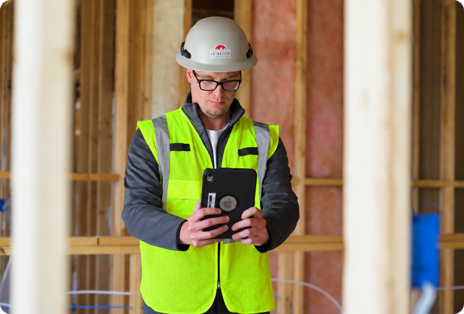
Our old process took our teams somewhere between 6 to 8 hours to get done 15 to 20 units of punch … it used to be a whole day process just to get the items into the system, labeled correctly, assigned correctly, and then get the publish out. With PlanRadar, we can cut that time almost in half and get 20 units done in 4 to 5 hours.

Work that used to take hours or days to set up correctly now takes 10–15 minutes.
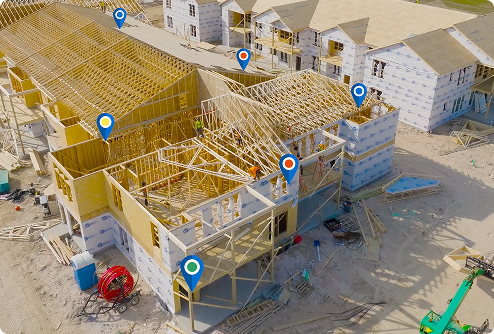
We’re probably 90% faster in setup. What used to take hours or sometimes days to get setup correctly is now done within 10–15 minutes.

Implementation and onboarding moved fast enough that Horizon was running PlanRadar with its field team on its very first job within half a day.
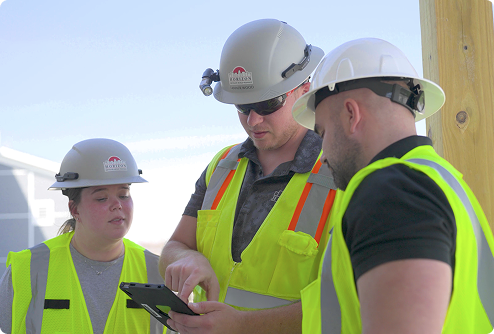
We were up and running with PlanRadar with our field staff on our very first job within a half a day.
As Horizon scaled from roughly 5 projects a year to 15–20, PlanRadar enabled the warranty team to absorb the volume increase without adding headcount.
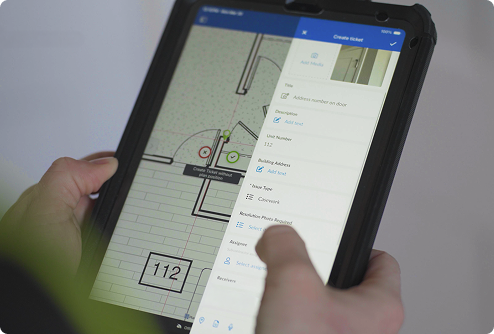
The same team size can handle over 100 claims per month without the need to scale headcount.

Remote review and approval of punch items means fewer physical walkbacks to verify completed work.
As Horizon continues to grow, PlanRadar remains a key part of how the company keeps punch and warranty work fast, consistent, and easy for every generation of its field team to adopt. With that foundation in place, Horizon is positioned to take on more projects without losing the speed or quality its clients expect.
