AI Built In, Not Bolted On
With AI running directly on the data your teams capture
in PlanRadar, you get instant clarity and your project stays protected. Secure, compliant, and fully ISO certified.

Select your region
Cancel
Sorry, region not found. Please try again.
Clarity at every step & quality in every outcome with AI
Over 200,000 users across 75+ countries are eliminating paperwork with PlanRadar


With AI running directly on the data your teams capture
in PlanRadar, you get instant clarity and your project stays protected. Secure, compliant, and fully ISO certified.
Ensure construction quality by digitally documenting all construction processes in one place.
 Site diaries
 Subcontractor task management & communication
 Inspections, checklists & safety audits
 Defect management & snagging
 Handovers
 Evidence collection & claims management
Ensure construction quality by digitally documenting all construction processes in one place.

“At CBRE, we are always on the lookout for new digital tools that add value to our customers and make our work easier for our employees. With PlanRadar we have found a product that meets both requirements – and a team that knows the market, listens and constantly evolves the product.”
– CBRE
Immediately capture and resolve risks on site for total compliance.
Fire risk assessment forms
Digital fire safety records
Reporting & documentation


Immediately capture and resolve risks on site for total compliance.


“The relationship that we have developed with Plan Radar and the extensive understanding of the digital platform has allowed FCS to continually improve and develop their final product, ensuring that our clients receive only the best end product.”
— Jon Holt,
Director of Operations at FCS
Oversee multiple projects with ease while maintaining exceptional quality.
Site inspections
Quality assurance
 Health & safety surveys
 Project management
 Fire safety compliance
Oversee multiple projects with ease while maintaining exceptional quality.


“PlanRadar has enabled our site inspection teams to gather site data quickly and efficiently, whilst significantly reducing the time required to process and present this data. There is huge potential to utilise PlanRadar further in the 3D-sphere and provide our clients with the best possible service.”
– ARUP
Ensure on-time project completion with full visibility and oversight at all times.
Project oversight & monitoring
Secure storage & archiving of project information
 Quality & safety assurance
Handovers
Claims management
Ensure on-time project completion with full visibility and oversight at all times.

“We see PlanRadar as an option that will provide concrete time-savings for our colleagues while being cost-effective. The initial roll-out will focus on streamlining the repair and maintenance process, but we see plenty of other processes that could benefit from this flexible solution in the future.”
– British Land
Simplify on-the-ground facility operations and effortlessly pinpoint areas for improvement.
Fault recording
 Recurring maintenance & repairs
Inspections, checklists & safety audits
Handovers
Evidence collection & claims management
Simplify on-the-ground facility operations and effortlessly pinpoint areas for improvement.


“PlanRadar saves me four to six hours per week of time spent on administration for maintenance management. For individual restaurant managers, I would estimate the saving at three to five hours per week.”
– Five guys
PlanRadar adapts to the way you work, not the other way around. Collect and report data the way that best suits your team.
With unlimited free subcontractors and watchers, pay for your core team but easily collaborate with all project stakeholders.
91% of subcontractors say that PlanRadar is easy to use with onboarding taking less than 10 minutes.
Gain full transparency and reduce risk and rework with advanced visual documentation.
Learn more


PlanRadar has enabled our site inspection teams to gather site data quickly and efficiently, whilst significantly reducing the time required to process and present this data.”
Angus Elliot ,
ARUP

PlanRadar is a genuinely intuitive platform. It’s easy-to-use, you can expedite survey work and provide real time progress with your client base.”
Ross O’Loughlin ,
Head of Global Technical Services

With PlanRadar everybody can see what’s going on. We’ve got a much less siloed and a much more concentrated overview of projects. It’s just great. I think once you’ve done snagging through PlanRadar, you would never go back because it’s so much easier.”
Alex Turner ,
Head of Digital Design and Construction

PlanRadar allows us to share information across all of our teams instantly, and when people have the information they need, they’re empowered to make the right decisions.”
Alex Banks ,
Head of Project Delivery, Innovaré

PlanRadar offers FCS efficiencies, transparency and the Golden Thread of Information which provides a greater quality of service provided to clients.”
Jon Holt ,
Director of Operations at FCS

PlanRadar saves me four to six hours per week of time spent on administration for maintenance management.”
Thomas Daufenbach ,
Maintenance Manager at Five Guys

Since using PlanRadar, Delta reduced time spent on reporting by 81%
Delta Real Estate
Pre-built, no-code integration with 200+ applications.
Learn more
Industry report
Managing Project Changes in the Age of AI
This report explores how mid-project changes impact outcomes, accountability, and performance across 1,728 construction professionals in Europe, the Middle East, and Asia-Pacific.
Download today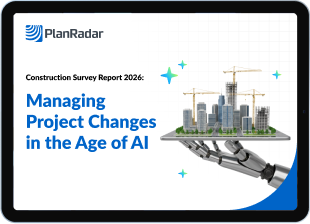
Industry report
Construction QA/QC Impact Report
This report examines how inconsistent QA/QC standards drive rework, cost overruns and disputes across 811 construction professionals in 13 countries.
Download today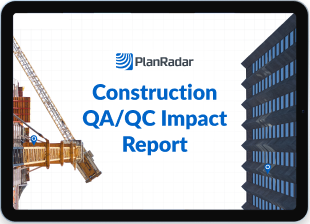


1. Create an account

2. Upload plans

3. Invite team members

4. Download app
